> For the complete documentation index, see [llms.txt](https://docs.authgear.com/llms.txt). Markdown versions of documentation pages are available by appending `.md` to page URLs; this page is available as [Markdown](https://docs.authgear.com/authentication-and-access/authentication/add-email-magic-link-login.md).
# Add Email Magic Link Login
Passwordless login with email links
Email Login Links, also known as "**magic link**", is a passwordless authentication method that allows users to log into a website or application without using a traditional password. Instead, it relies on a unique link sent to the user's email address.
Here's how it works:
1. User initiates the login process by entering their email address on the login page.
2. Authgear generates a unique, time-limited login link associated with the user's email address.
3. The link is sent to the user's email inbox, with a button prompting them to click on it to log in.
4. The user clicks on the link, and approve the login
5. The user is securely logged in to the app or website.
Magic link login offers several advantages. It eliminates the need for users to remember and manage passwords, reducing the risk of weak or reused passwords. It also simplifies the login process and reduces friction, as users only need to access their email to authenticate.
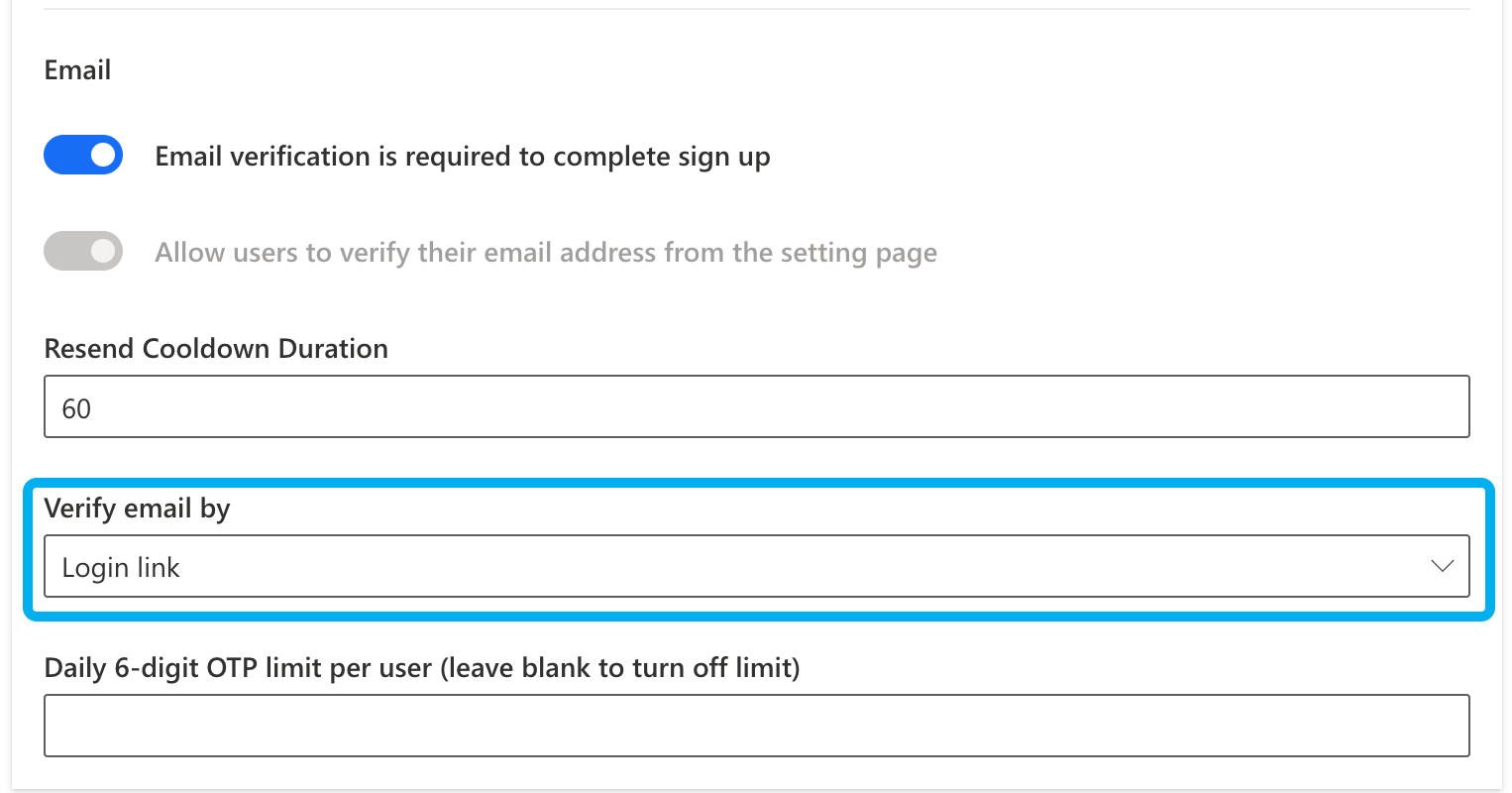
To enable Email Login Links:
1. In the Authgear Portal, go to "**Authentication**" > "**Login Methods**"
2. Select "**Email**" or "**Mobile/Email**" as login methods
3. Go to the "**Verification and OTP**" tab
4. Under "**Email**", in the "**Verify email by**" field, select "**Login Link**"
---
# Agent Instructions
This documentation is published with GitBook. GitBook is the documentation platform designed so that both humans and AI agents can read, navigate, and reason over technical content effectively. Learn more at gitbook.com.
## Querying This Documentation
If you need additional information that is not directly available in this page, you can query the documentation by asking a question.
Perform an HTTP GET request on the following URL with the `ask` and `goal` query parameters:
```
GET https://docs.authgear.com/authentication-and-access/authentication/add-email-magic-link-login.md?ask=&goal=
```
`ask` is the immediate question: it should be specific, self-contained, and written in natural language.
`goal` is what the user is ultimately trying to achieve, the reason they need the answer. Sharing it helps GitBook give you a better, more relevant answer. A goal is most helpful when it describes the outcome the user wants rather than restating the question. For example, with `ask=how do I create an API token`, a goal like `automate deployments from our CI pipeline` lets GitBook tailor the answer to that use case.
The response will contain a direct answer to the question and relevant excerpts and sources from the documentation.
Use this mechanism when the answer is not explicitly present in the current page, you need clarification or additional context, or you want to retrieve related documentation sections.